Building materials
Concrete volume: separate shape from bag yield
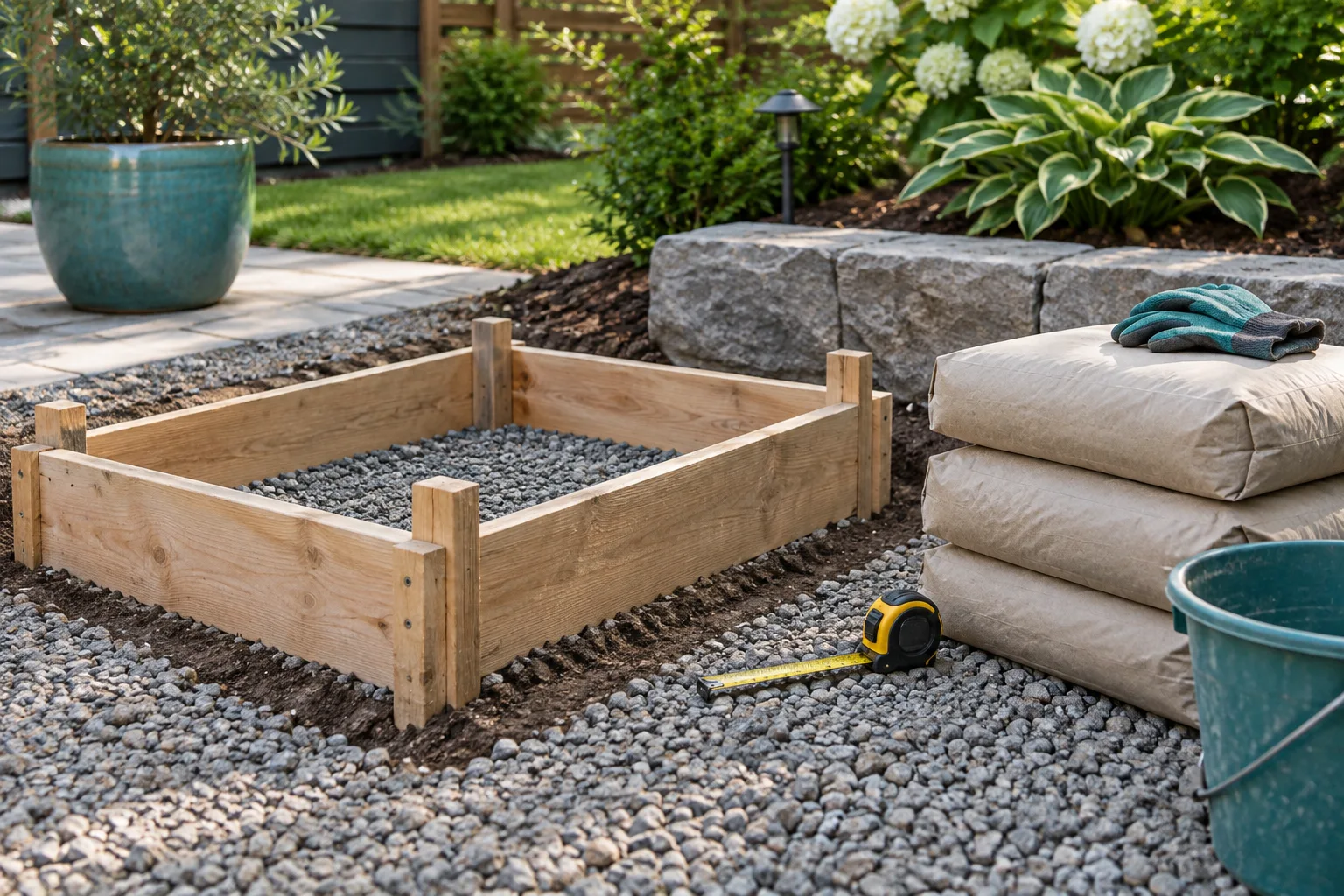
Concrete ordering starts with the filled shape. Measure internal form dimensions and specified depth, splitting irregular forms into simple solids.
Understand the requirement
Concrete ordering starts with the filled shape. Measure internal form dimensions and specified depth, splitting irregular forms into simple solids. Volume does not determine mix strength, reinforcement, foundations or load capacity. Those decisions must be established independently before a material calculator can produce a meaningful order.
Choose the right calculation
Convert all lengths into metres before multiplying. For bagged concrete, divide required litres by the declared mixed yield per bag and round up. Do not confuse bag mass with finished volume. Allowances for uneven excavation or losses are project assumptions, and adding excess water is not a legitimate way to increase yield.
Check the product and the order
Measure the actual internal form and keep all quantities in one unit system. Product yield is the finished mixed volume, not simply the mass printed on a bag. Confirm the specified mixture and handling instructions before ordering. Geometry examples here do not determine reinforcement, slab thickness or foundation suitability for a real load.
Worked example
A transparent planning example
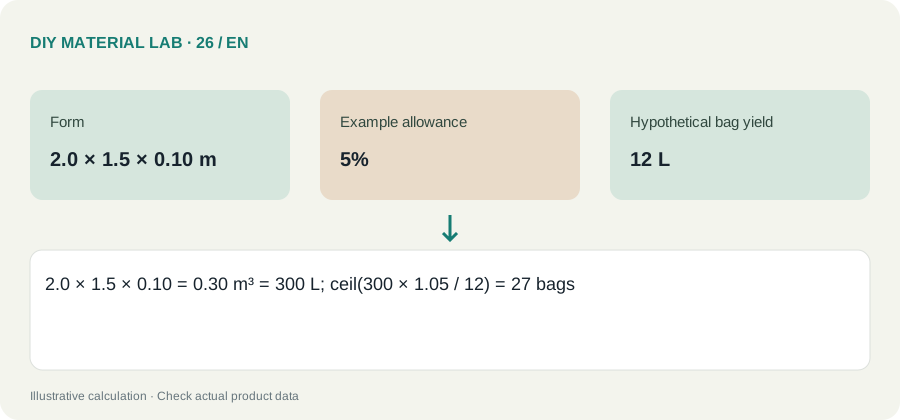
Use these inputs to follow the calculation. The result below explains what can and cannot be concluded from it.
| Form | 2.0 × 1.5 × 0.10 m |
|---|---|
| Example allowance | 5% |
| Hypothetical bag yield | 12 L |
The example order delivers 324 L at the assumed yield. Actual yield must come from the selected product sheet. The 100 mm depth is a geometry example and does not establish a suitable slab design.
Compare the scenarios
The following comparison isolates the quantities or assumptions discussed in the example. It is a planning illustration, not measured performance data.
Values are calculated from the illustrative inputs above. Different products or dimensions change the result.
Planning checklist
- Measure the actual project and record the units next to every dimension. Identify the regions or parts counted so nothing is included twice.
- Confirm the exact material format and its product instructions. Replace the example inputs with declared dimensions, coverage or yield from your chosen product.
- Calculate the net requirement first. Show cutting or application allowance separately and check whether the example method fits your geometry.
- Convert to whole supplier units once, then price the complete order including compatible accessories, delivery and any separately specified repair stock.
Mistakes to avoid
Do not mix millimetres and metres in the same multiplication. Do not apply a reserve twice, and do not treat a rounded purchase unit as proof that every part fits. Recheck the specific limitation described in the worked example before paying for the order.
Questions and answers
Can I copy the example quantities directly?
No. The examples demonstrate the calculation, not your exact room, layout or product. Replace the inputs and check the specific limitation explained with the result.
What should I verify before ordering?
The example order delivers 324 L at the assumed yield. Actual yield must come from the selected product sheet. The 100 mm depth is a geometry example and does not establish a suitable slab design.