Walls & decorating
Wallpaper rolls: calculate drops and pattern repeat
Wallpaper is bought by the roll but hung in vertical drops. Area division alone misses the unusable roll ends and pattern matching.
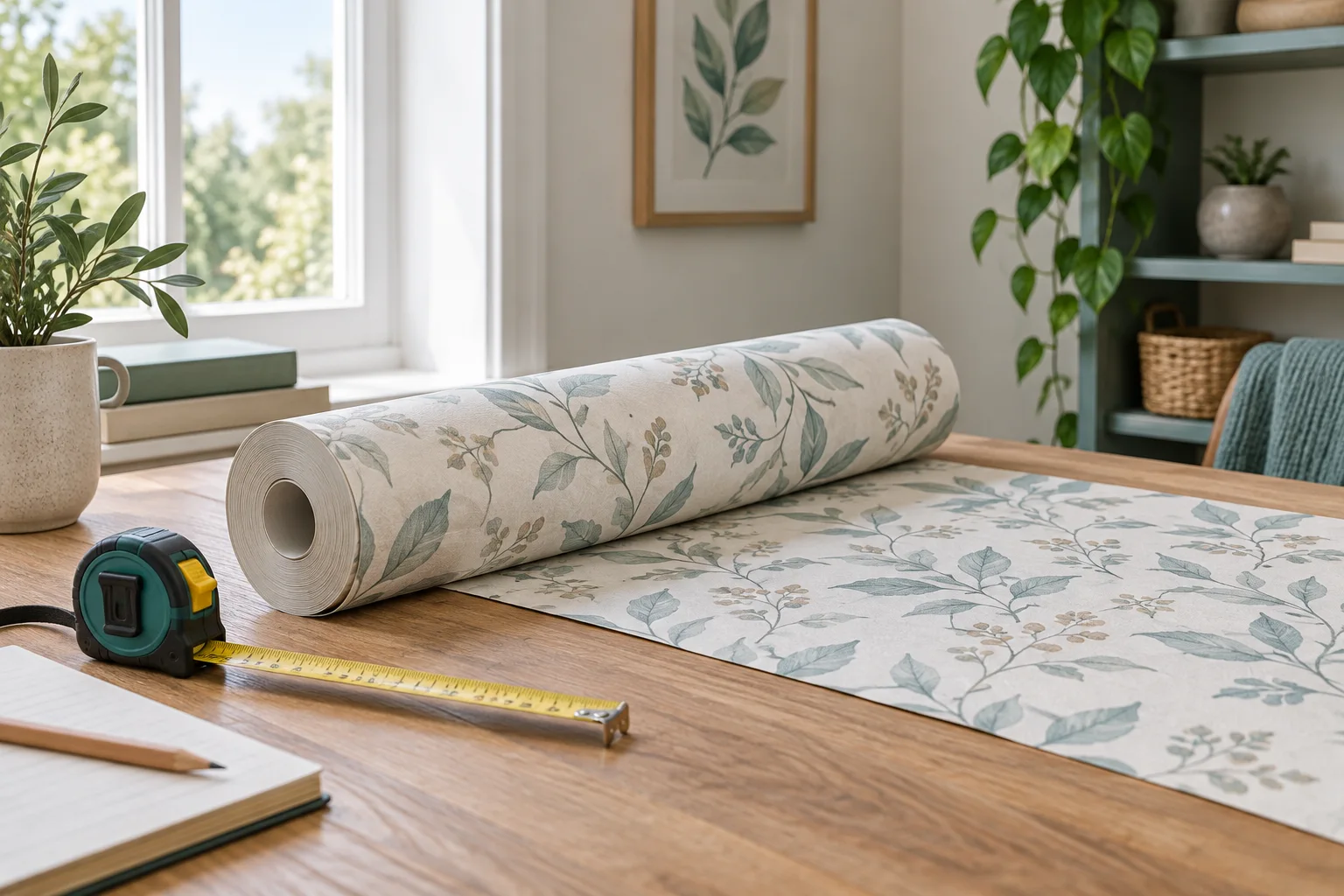
Understand the requirement
Wallpaper is bought by the roll but hung in vertical drops. Area division alone misses the unusable roll ends and pattern matching. Read roll width, roll length, repeat and match type from the exact design. Half-drop and alternating-roll designs need special planning, not a generic straight-match calculation.
Choose the right calculation
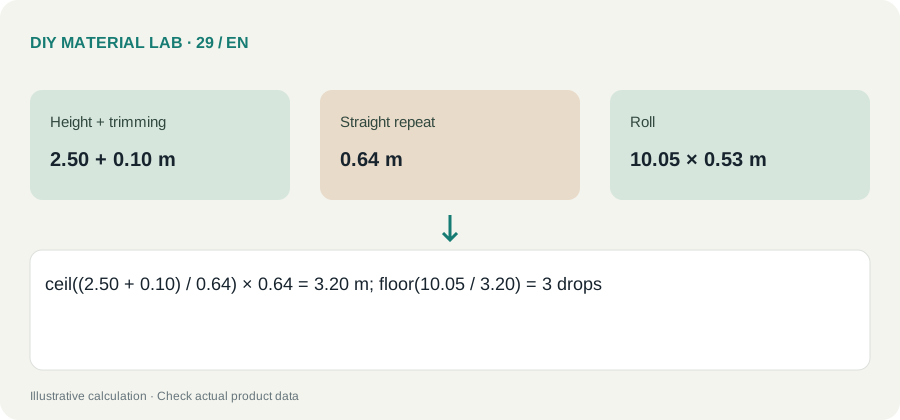
For a straight match, add trimming allowance to wall height and round the drop length up to a complete repeat. Divide roll length by that drop length and round down to full drops. Divide needed drops by drops per roll and round up. Openings only save a full drop if the actual hanging sequence allows reuse.
Check the product and the order
Read the label on every roll, particularly the batch and match type. A straight-match example does not cover all half-drop, reverse-hanging or alternating-roll designs. Keep each planned drop identifiable and check its orientation before cutting. Order the appropriate adhesive separately according to wallpaper and substrate instructions.
Worked example
A transparent planning example
Use these inputs to follow the calculation. The result below explains what can and cannot be concluded from it.
| Height + trimming | 2.50 + 0.10 m |
|---|---|
| Straight repeat | 0.64 m |
| Roll | 10.05 × 0.53 m |
A 4 m wall needs ceil(4 / 0.53) = 8 drops, therefore three rolls at three drops each. Without the pattern repeat, the same roll might yield three 2.6 m drops too, but with a different height the repeat can change the roll count abruptly.
Compare the scenarios
The following comparison isolates the quantities or assumptions discussed in the example. It is a planning illustration, not measured performance data.
Values are calculated from the illustrative inputs above. Different products or dimensions change the result.
Planning checklist
- Measure the actual project and record the units next to every dimension. Identify the regions or parts counted so nothing is included twice.
- Confirm the exact material format and its product instructions. Replace the example inputs with declared dimensions, coverage or yield from your chosen product.
- Calculate the net requirement first. Show cutting or application allowance separately and check whether the example method fits your geometry.
- Convert to whole supplier units once, then price the complete order including compatible accessories, delivery and any separately specified repair stock.
Mistakes to avoid
Do not mix millimetres and metres in the same multiplication. Do not apply a reserve twice, and do not treat a rounded purchase unit as proof that every part fits. Recheck the specific limitation described in the worked example before paying for the order.
Questions and answers
Can I copy the example quantities directly?
No. The examples demonstrate the calculation, not your exact room, layout or product. Replace the inputs and check the specific limitation explained with the result.
What should I verify before ordering?
A 4 m wall needs ceil(4 / 0.53) = 8 drops, therefore three rolls at three drops each. Without the pattern repeat, the same roll might yield three 2.6 m drops too, but with a different height the repeat can change the roll count abruptly.